Kif l-istartups qed jiddeplojaw AI privata b'mod sieket
Il-privatezza, il-kontroll tal-ispejjeż u l-ebda lock-in tal-vendor qed iġġib l-istartups li jiċċaqalqu malajr biex jħaddmu l-mudelli proprji tagħhom.

Għal snin, id-deployment ta' mudell ta' lingwa kbira kien ifisser li tinkiteb għal API fis-sħaba, tgħaddi d-data tiegħek, u tara l-ispejjeż jikbru b'mod imprevedibbli ma' kull token li l-prodott tiegħek jikkonsmaw. Dak il-mudell kien logiku meta l-AI on-premise kienet teħtieġ tim dedikat ta' ML u miljuni fil-hardware. Illum mhux hekk. Ġenerazzjoni ġdida ta' startups — qasrin, konxji tal-konformità, u attenti għall-ispejjeż — qed tistabbilixxi b'mod sieket infrastruttura ta' AI privata u tiskopri li l-kompromessi nbidlu b'mod fundamentali favurhom.
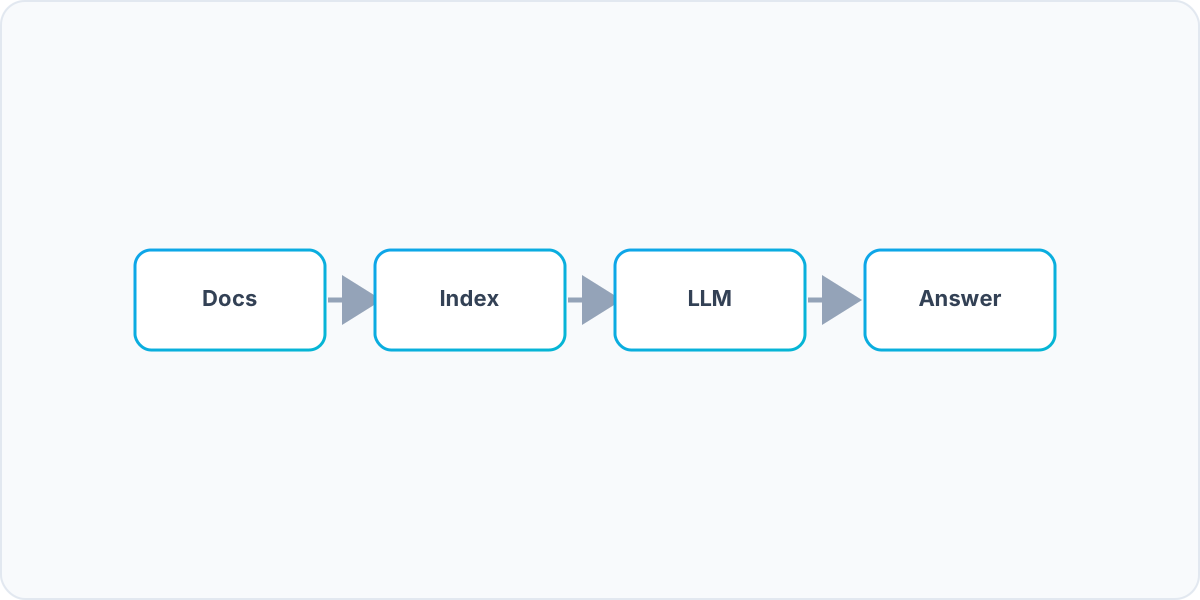
Għaliex l-AI privata mhix aktar biss storja tal-intrapriżi
In-narrattiva dwar l-AI on-premise ilha żmien dominata mill-banek u l-kontraenti tad-difiża — organizzazzjonijiet b'kemm il-baġit kif ukoll il-pressjoni regolatorja biex jiġġustifikaw l-investiment. Iżda l-ekonomika nbidlet b'mod drammatiku. L-LLMs open-source laħqu parità tal-kwalità mal-APIs proprjetarji għal firxa wiesgħa ta' kompiti. Server GPU wieħed jista' jħaddem mudell kapaċi ta' 7–13B parametri b'spiża monthly fissa li, fil-volumi ta' użu tal-startup, ħafna drabi torboħ fuq API fis-sħaba fi tlieta sa sitt xhur. U forsi l-aktar importanti, l-istartups Ewropej li joperaw taħt il-GDPR qed jiskopru li "qatt ma nibagħtu data lil API ta' parti terza" hija pożizzjoni ta' konformità li hija ħafna aktar faċli li tiddefendi minn "nużaw fornitur fis-sħaba tal-US b'Ftehim dwar l-Ipproċessar tad-Data."
Fintech: żżomm id-data tal-klijenti ġewwa l-VPC
Ikkunsidra startup fintech li tibni assistent awtomatizzat ta' scoring tal-kreditu. Il-prodott tagħhom janalizza l-istorji tat-tranżazzjonijiet bankari, ir-rekords tal-paga, u d-dokumenti tat-taxxa biex jipproduċi rakkomandazzjonijiet tas-self. Tibgħat dik id-data lil API ta' LLM ta' parti terza — anke taħt DPA — toħloq riskju reali: esponiment regolatorju jekk il-fornitur tal-API jsofri ksur, ambigwità dwar it-taħriġ tal-mudell fuq l-inputs tal-klijenti, u d-diffikultà prattika li tispjega lil klijent korporattiv eżattament fejn titħaddan id-data finanzjarja tal-klijenti tagħhom. Din l-istartup minflok iddeplojat mudell ta' 13B mfejjaq fuq server privat ġewwa l-VPC proprja tagħha. Id-data tal-klijenti qatt ma titlaq mill-ambjent. Il-logs tal-awditu huma kompleti u kkontrollati internament. Il-frott: klijenti korporattivi li qabel stagħnu l-approvazzjoni tal-prokura issa jagħlqu fi ġimgħat, għax il-fluss tad-data huwa sempliċi biżżejjed li jispjegah lil CISO f'dijagramma waħda.
Healthtech: assistenza ta' noti kliniċi konformi mal-GDPR
Startup healthtech li tipprovdi dokumentazzjoni assistita mill-AI lil kliniki mediċi tiffaċċja restrizzjoni iktar drastika: id-data tas-saħħa hija kategorija speċjali taħt il-GDPR, u l-penali għall-ġestjoni ħażina tagħha huma severi. Il-prodott tagħhom kellu bżonn jissummarizza noti kliniċi, jifflagga oqsma nieqsa, u jissuġġerixxi kodiċi dijagnostiċi — kollha kompiti tajbin fl-ambitu tal-LLM modern open-source. Iżda l-ebda API fis-sħaba ma kienet aċċettabbli; kwalunkwe data pproċessata minn mudell estern kienet tirrikjedi l-obbligi tal-Artikolu 9 li kienu se jagħmlu l-prodott mhux kummerċjabbli. Is-soluzzjoni kienet deployment on-premise f'kull sit tal-klinika, bil-mudell jaħdem lokalment fuq workstation GPU waħda. L-ebda data ma taqsam il-konfini tan-netwerk tal-klinika. It-tim tal-inġenerija tal-startup jiġġestixxi l-aġġornamenti tal-mudell mill-bogħod permezz ta' kanal ta' ġestjoni enkrittjat, iżda l-inferenza hija dejjem lokali. Kliniki li kienu ċaħdu l-għodod tal-AI bħala legalment impossibbli saru adottanti bikrija.
It-tħaddim tal-mudell ġewwa n-netwerk proprju tal-klinika kien l-unika opzjoni li t-tim legali tagħna kien japprova — u ladarba kellna dan, il-prokura saret sempliċi. L-AI privata ma kinitx għażla teknika; kienet abilitatur tan-negozju.
Legaltech: RAG fuq kuntratti fuq kaxxa GPU privata
Startup legaltech li tibni għodda ta' reviżjoni tal-kuntratti tiffaċċjat verżjoni differenti tal-istess problema. L-uffiċċji legali u l-klijenti tagħhom jistennew kunfidenzjalità assoluta. L-invjar ta' abbozzi ta' kuntratti — li jistgħu jkunu fihom dettalji ta' M&A mhux irrilexxjati, data personali, jew sigriet kummerċjali — lil kwalunkwe API esterna huwa mhux mistenni. Din l-istartup built pipeline ta' retrieval-augmented generation (RAG) li taħdem fuq server GPU dedikat kolloċat fl-istess ċentru tad-data bħas-sistemi ta' ġestjoni tad-dokumenti tal-klijenti tagħha. L-LLM qatt ma jiġi espost għall-internet; jirċievi biss il-faqqigħet tal-kuntratt rilevanti rkuprati mis-saff tat-tiftix tal-vektori, jipproċessahom, u jirritorna analiżi strutturata. Il-latenza hija baxxa għax kollox jaħdem fuq l-istess netwerk lokali. Il-frott kien immedjat: l-istartup setgħet tgħid b'mod kredibbli lill-uffiċċji legali li l-mudell qatt ma "jara" ebda dokument li ma ġiex invijet b'mod espliku għall-għodda ta' reviżjoni, u li l-ebda storja ta' query ma tinżamm.
Il-vantaġġ tal-startup: għaliex il-kumpaniji iżgħar jibbenifikaw iżjed, mhux inqas
Hemm tentazzjoni li wieħed jassumi li l-infrastruttura ta' AI privata hija aktar diffiċli għall-istartups milli għall-intrapriżi kbar. Fil-prattika, il-kontra hija ħafna drabi vera. Startup tista' tiddisinja l-flussi tad-data tagħha b'mod korrett mill-ewwel jum, aktar milli tħoll snin ta' dipendenza fis-sħaba akkumulata. Startup b'prodott wieħed iffukat tista' tidimensjona l-hardware tagħha b'preċiżjoni għall-bżonnijiet ta' dak il-prodott, aktar milli tixtri għal sett imxerred ta' każijiet ta' użu. U startup li tbiegħ f'setturi regolati tista' tuża l-AI privata bħala differenzjatur kompetittiv ġenwin — tarag li kompetitur akbar marbut ma' arkitettura ta' API fis-sħaba ma jistax jirreplikha faċilment.
- Spiża prevedibbli fuq skala: spiża fissa ta' server GPU ma tikbirx mal-volum tal-query, u telimina x-xokk tal-kont per-token hekk kif il-prodott jikseb utenti.
- Privatezza tad-data mill-ewwel jum: l-ebda xogħol retroattiv ta' konformità meta klijenti korporattivi jistaqsu fejn tmur id-data tagħhom.
- L-ebda lock-in tal-vendor: il-mudelli open-source jistgħu jiġu mibdula, mfejjqa, jew aġġornati mingħajr ma terġa' tinnego l-kuntratti tal-API.
- Iterazzjoni aktar malajr: il-kondotta tal-mudell tista' tiġi aġġustata on-prem mingħajr ma tistenna tibdil tal-fornitur tal-API jew tittratta ma' ċikli ta' deprecation.
- Pożizzjonament tal-bejgħ aktar qawwi: "id-data tiegħek qatt ma titlaq mill-ambjent tiegħek" jagħlaq ftehim fl-intrapriżi u s-settur pubbliku li kompetitur tal-API fis-sħaba ma jistax jorboħ.
X'jagħmel Privonis għall-istartups
Privonis jgħin lill-istartups Ewropej jiddeplojaw LLMs privati, on-premise mingħajr il-bżonn ta' tim kbir intern ta' ML. Aħna nittrattaw l-għażla tal-mudell, id-dimensjonament tal-hardware, id-deployment, u l-manutenzjoni kontinwa — biex l-inġiniera tiegħek jistgħu jiffokaw fuq il-prodott tiegħek aktar milli fuq l-operazzjonijiet tal-infrastruttura. Kemm jekk għandek bżonn workstation GPU waħda għal kompitu ffukat jew cluster multi-node għal inferenza ta' rendiment għoli, aħna niddisinjaw u nħaddmu l-istakk li jżomm id-data tiegħek sovrana u l-ispejjeż tiegħek prevedibbli. L-istartups li jiċċaqalqu l-aktar malajr fis-swieq regolati huma dawk li jittrattaw l-infrastruttura tal-AI bħala assi strateġiku, mhux abbonament lil API tal-kummerċ. Jekk dik hija l-kumpanija li qed tibni, għandna nitkellmu.
Nitkellmu dwar il-proġett AI tiegħek
Ibbukkja telefonata

